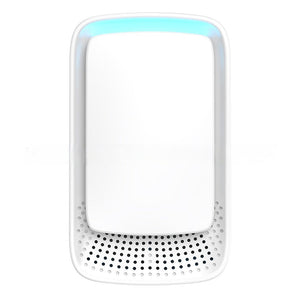
Advertisement feature
The Effortless Way I Finally Got On Top of the Floating Dust In My Home, Without A Single Filter
Most of us have seen it.
The sun comes through the window, and suddenly the air is full of tiny floating specks.
A friend's toddler noticed it the last time she visited.
Every time the sun came in, she stopped, looked up and said, “Look, snow.”
Everyone laughed.
I laughed too. But I went red.
I'd spent the whole morning cleaning before she came over.
And once I'd seen it, I couldn't stop seeing it.
The morning sun through the kitchen window while I made coffee.
The light across the kids' beds when I opened their curtains.
I'd washed their sheets that morning. And there it was, drifting down onto their pillows.

I'm a house-proud stay-at-home mom. Keeping a nice home for my family is my job, and I'm good at it. So this got under my skin.
No matter how much I cleaned, the next sunny morning it was back, like nothing had happened.
Like I wasn't even trying.
That's the part that got to me. I was trying. Every single day.
I had guests saying it felt "stuffy" in my house.
And part of me started to wonder: is it just me? Am I not cleaning properly?
I didn't want another chore.
I just wanted to feel like my home was under control again.
Instead, I felt stuck.
Like I was doing everything right and failing anyway.
The good news?
There's a simple fix, and it isn't cleaning more.
But first, here's everything I tried.
Why the usual fixes weren’t enough
So I tried everything...

- Dusting: it just seemed to throw more dust into the air.
- Vacuuming: I was cleaning the floor while the problem floated over my head.
- Opening windows: it just let in more pollen and outside dust.
I'd clean, and it would just come back.
Honestly, it was exhausting.
An air purifier helped, but:
- The size: It was the size of a bin, in a room that's meant for playing.
- The noise: The fan hummed all night in my youngest's room.
- The filters: It needed a new $30 filter every few months.
- The price: One in every room, plus the filters, was more than I wanted to spend.
I'd bought it to solve a problem.
Instead I'd signed up for a subscription: filters, every few months, for as long as I owned it.
At this point I'd tried everything a normal person would try.
So why did the floating dust keep coming back?
What's really floating in your home
After looking it up, I learned something nobody had ever told me.
Every home is constantly putting particles back into the air.
Where it all comes from
- Dust: kicked back up every time someone walks across the room.
- Pollen: drifts in every time a window or door opens.
- Mold spores: can be released from damp corners.
- Microplastics: tiny fibres shed from the sofa and carpets.
- Pet dander: shed by pets as they move around.
So a freshly cleaned room can still have all of this floating through it.
Honestly? Reading that was a relief.
It wasn't me. It never was.
But it also meant I couldn't ignore it anymore. That's the air my family and I breathe every day.
What I found
That's when I found out about negative ionizers.
A purifier has to pull the air through a filter.
An ionizer works on the air where it is.

How it works
- 1It sends out a steady stream of negative ions.
- 2The ions give tiny floating particles an electric charge.
- 3Charged particles stop drifting and get pulled to the nearest surface, like the wall near the outlet.
It works on the fine particles floating in the air: dust, pet dander, smoke, pollen and mold spores.
The same things I'd watched drifting down onto the kids' pillows.
So I checked the research
I'll be honest, I was sceptical. An ionizer sounded like a gimmick, so before buying anything, I went looking for actual tests.
In lab tests, negative ionizers cleared around 70% of floating dust in a small room within 15 minutes, and around 80% of smoke particles within 20 minutes.
That was enough for me to stop wondering whether ionizers work.
The real question was which one.
But when I started shopping, I realised not all ionizers are built the same.
A lot of them had the same problems I'd just escaped.
What I kept running into:
- Expensive: too pricey to put one in every room.
- Filters: a filter to replace anyway.
- Noisy: a fan humming away.
- Bulky: taking up floor space
- Ozone: some give off ozone you don't want to breathe.
I wrote down what I actually needed:
- Affordable: cheap enough to put one in every room.
- No filters: $0 a year in filters, ever.
- Quiet: under 36 dB, quieter than a library, so I can sleep next to it.
- Small: 110 g, lighter than my phone.
- Safe: tested at 0.03 ppm ozone, under the 0.05 ppm limit, so it's fine next to the kids' beds and pets.